
 By
By 
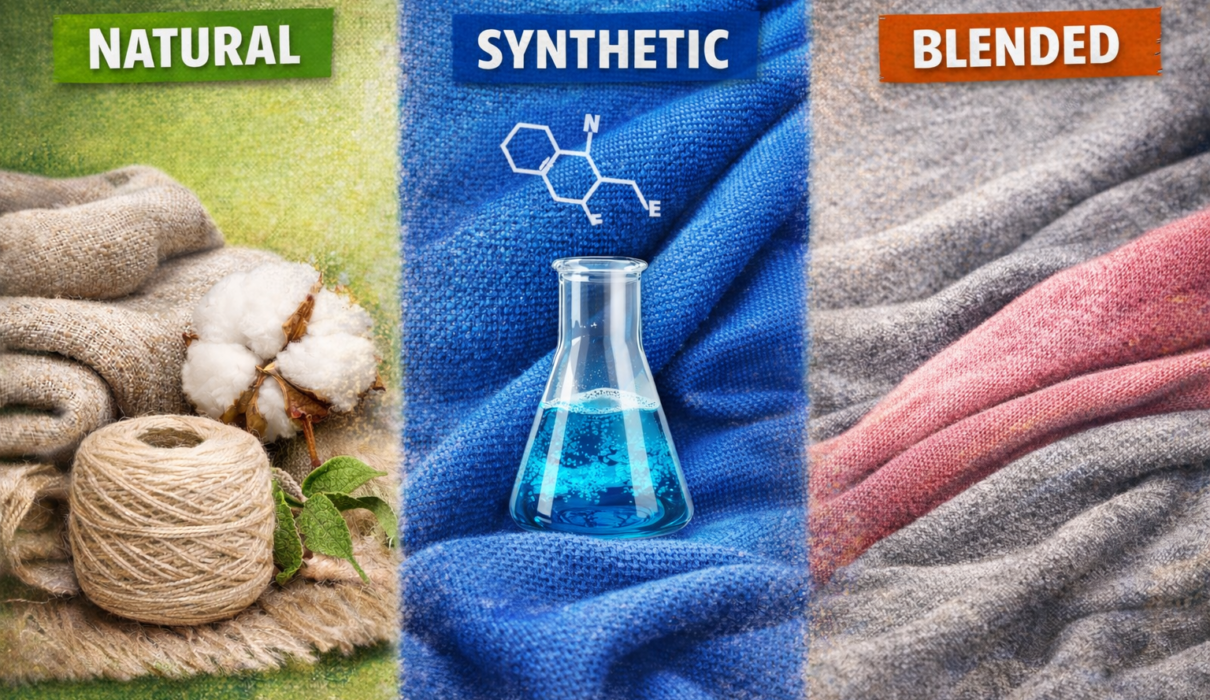
Fabrics are an equally significant part of our life as they are involved in almost every type of material we are surrounded by on a daily basis, including clothing, bedding, and many others. Choosing the appropriate fabric can directly impact your comfort level, how long the product will last, and may even affect how you feel, emotionally-speaking. To ensure that you have selected the appropriate fabric type for your purpose, it is essential to familiarize yourself with the three main fabric types: Natural, Synthetic and Blended. Each type has its own unique characteristics/qualities, advantages/disadvantages, and are used best for different purposes.
Types of Fabrics
Fabrics can be differentiated based upon the source of the fibre used to create the fabric. There are fabrics made from the earth (natural) and those that come from the human being (synthetic or manufactured) and those that are a mixture of natural and synthetic anchor fibres. If you understand these three types of fabric, then you will make a more informed decision about the best type of fabric to wear and use in your everyday life.
Natural Fabrics – A Natural Source of Comfort
What is a Natural Fabric?
Natural fabrics are created using fibres taken directly from the earth (plant) or animal. There are many natural fibre fabrics that have been around for a long period of time and they have earned a reputation as being very soft, comfortable to wear, and breathable.
The Types of Natural Fabrics
Some examples of natural fabrics are cotton, linen, silk, wool and jute. Cotton is used primarily for day-to-day wear while silk has a luxurious and rich feeling.
Natural Textiles Benefits
Natural textiles are breathable and skin-friendly; they can be worn in all weather conditions. Because they have a high moisture absorption rate, it can help to keep you cool when the humidity is high, making natural fibres excellent for summer clothing and for people with sensitive skin.
Natural Fabrics Constraints
Natural fibres are typically very comfortable to wear. However, they can be very prone to wrinkling, shrinkage due to improper care, and will frequently cost more than synthetic fibres. They also require extra time and care to clean and maintain properly.
Modern, Strong and Versatile: Synthetic Fabrics
What are Synthetic Fabrics?
Synthetic fabrics are produced primarily through a chemical process from petroleum pipelines and into conventional fabrics. The synthetics are designed to be durable, strong, consistent or standard and low-cost.
Common Uses of Synthetic Fabrics
Some examples of common synthetic fabrics include polyester, nylon, acrylic and spandex; therefore, most activewear and clothing you will likely find in stores contain these kinds of fabrics.
Synthetic Textiles Offer Many Benefits
Synthetic materials are durable, have good wrinkle resistance, and are easy to wash and care for. These fabrics will dry quickly and maintain their original shape after a number of washes, making them excellent options for those with an active lifestyle.
The Disadvantages of Synthetic Textiles
Compared to natural textiles, synthetic fabrics generally do not allow for as much air to pass through and thus can often be uncomfortable to wear when it’s very warm. Additionally, some synthetic fabrics can hold onto moisture (perspiration) and thus irritate sensitive skin types.
Blended Fabrics Provide the Best of Both Worlds
What is a Blended Fabric?
Blended fabrics are those made by combining two or more different types of fibres (typically one natural and one synthetic). The objective of using blend materials is to provide users with the combined benefits (i.e., comfort and strength) of both types of fibres.
Common Blended Fabric Types
Common examples of blended fabrics that many Consumers are purchasing include: cotton blend with polyester (C/P), wool blend with acrylic (W/A), and linen blend with viscose (L/V). All of these commonly used blend fabrics offer Consumers the best combination of softness, durability, and ease of care.
The Reasons That Consumers Purchase Blended Textiles
Blended textiles generally offer superior performance than either their natural fibre or synthetic fibre counterparts. Most of these products will wrinkle less than their corresponding natural fibre products, will generally last much longer, and are generally less expensive than their corresponding pure natural fibre products. This leads Consumers to widely use blended fabrics for both casual as well as professional/business casual attire.
Things to Keep in Mind Regarding Blended Fabrics
Since blended fabrics combine two different types of fibres together, they will not provide the same pure touch or feel that you would expect from using an all-natural fibre fabric. The level of breathability and overall function (eco-friendliness) of blended fabrics will be determined by the specific percentage (ratio) of the two types of fibres used to create the blended fabric.
Synthetic Materials
– Synthetic materials are durable, resist wrinkles, and are low maintenance.
– Synthetic materials dry rapidly, and do not lose their shape over time (however, they are still suitable for everyday wear).
Negative Aspects of Synthetic Materials
– Synthetic materials have less breathability than natural materials, which can cause discomfort when worn for a long period of time (especially during high temperatures).
– Some synthetic materials can absorb moisture, and may irritate someone’s skin if they are sensitive to it.
Mixing Natural / Synthetic Materials
– A mixture of two or more types of material (generally both natural and synthetic) comprises blended material.
– The purpose of this is to create a strong, yet soft fabric.
Utilization of Blended Materials
Blended materials (such as cotton/polyester, wool/acrylic, and linen/viscose) are common, and provide a good balance of comfort, durability, and ease of care.
The Popularity of Blended Materials
– Blended materials typically perform better than natural materials, and are less likely to wrinkle, are more durable, and are less expensive than pure, natural materials; therefore, they are perfect for everyday wear as well as workplace attire.
Concerns with Blended Materials
Because blended fabrics consist of multiple types of fabrics, it is possible that the feel may not be as 100% natural as a pure, natural fabric. Each type of material will have its own breathability and eco-friendliness depending on the ratio of the fabrics blended together.