
 By
By Traditional Indian Fabrics– An Artistic, Cultural and Craft-based Union
The respect, status and recognition afforded to Indian textiles across the globe is a result of their excellent craftsmanship, rich history and timeless beauty. Unlike the majority of textiles produced today, the methods by which traditional Indian textiles are made, incorporate traditions, cultures and sustainable methods in unique and beautiful designs. Two of the most recognised forms of handcrafted Indian textiles include Dabu printing and Ajrakh Fabric.
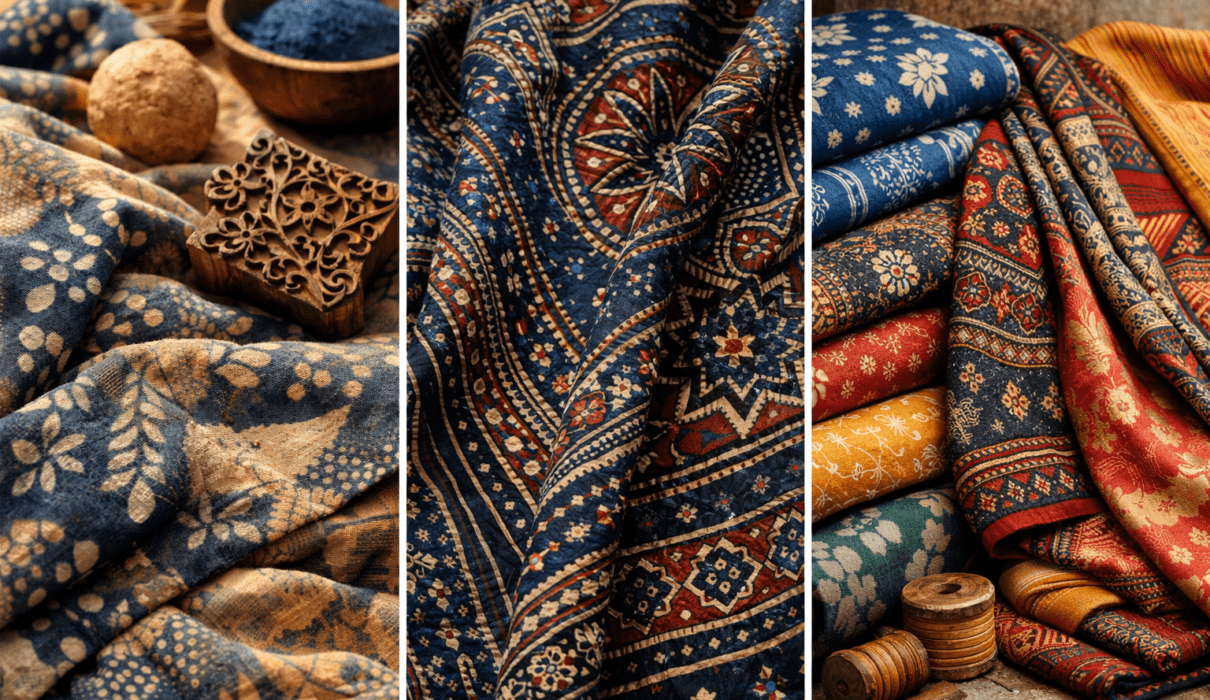
Dabu printed fabric is not merely a textile to wear, but is also a narrative of the artisans who make it, the region in which they were made and the traditions they represent and the many generations who have carried on these traditions. Dabu Printing Fabric: Creating Handcrafted Nature Inspired Textiles Dabu printing is a very old mud resist printed textile which has its origins in Rajasthan, India. The Dabu printing process consists of several steps that combine natural materials such as mud and lime, gum and wheat chaff, which when combined create a thick paste that can be used as a resist to create intricate designs. Using wooden blocks, artisans apply this thick paste to the cotton fabric before it is dyed. The natural mud paste will then be washed away and the dyed dry fabric will show the final designs in a variety of earthy and organic tones. Dabu printing is an eco-friendly process as it uses only natural dyes to create the finished product. The Dabu printed cotton fabrics are beautiful to wear, as they are light, soft, breathable and comfortable for warm climate. Each Dabu piece will be slightly different due to the handmade methodology, giving it a unique and one-of-a-kind character.
Dabu Print Fabric Showcase: –
-
Kurtis/Dresses
-
Sarees
-
Cushion Covers
-
Curtains
-
Dupattas/Stoles
Ajrakh Fabric Features
The Ajrakh fabric has its origins in the Kutch regions in Gujarat, as well as in the northern parts of Rajasthan. Ajrakh Fabric is distinguished by its unique mathematical designs composed of multiple layers of geometric shapes and adorned in vibrant colors through a detailed and intricate method. Ajrakh printing employs a multi-phase printing process to achieve the rich colors of the fabric with each stage involving painstakingly performed processes of washing, resist pour and dye, and drying the fabric sequentially.
Ajrakh traditionally uses natural dyes (indigo and madder root), which lend the fabric its distinctive rich colors, including shades of blue, maroon, black, and white. The most astoundingly special aspect of the Ajrakh fabric is that it demonstrates a quality of craft which often shows as identical front and back due to the very precise and skilled craftsmanship in the production process of the fabric. Ajrakh fabric is an excellent fusion of contemporary and traditional style in the fashion market and is gaining ground with both designers and conscientious consumers. The blending of modern fashion with traditional designs has made Ajrakh popular among creative designers and consumers looking for sustainable materials.
Examples of Ajrakh fabrics:
-
Ajrakh Sarees
-
Ajrakh Shirts
-
Ajrakh Dupattas
-
Ajrakh Stoles
The Importance of Traditional Fabrics Today The rapid rise in popularity of fast-fashion items, such as those manufactured with mass-produced synthetic fabrics, is leading many consumers to look to the future when purchasing clothing, and to embrace sustainable lifestyles. As people become increasingly aware of the harmful effects of clothing made with synthetic fabrics and of the environmental damage that fast fashion is creating, there will continue to be a growing interest in both traditional fabrics and sustainably-made products.
The advantages of traditional fabrics include: The way they feel next to the skin (i.e., breathable). Their longevity, assuming they are properly cared for. They support the livelihoods of artisans who still handcraft their products. Culturally, they have a heritage that is passed down from generation to generation. The unique features of each handmade piece are reflective of the individual artisan’s culture, heritage, and values. Therefore, each piece is a unique representation of that artisan. Summary The Ajrakh and Dabu-printed fabrics used in traditional Indian culture and production are the perfect combination of cultural art, culture, and sustainability. Whether for use in apparel or home decor, these fabrics add sophistication, authenticity, and lasting beauty to an individual’s personal style. Buying handcrafted textiles is not only a fashionable statement but also contributes to the preservation of cultural heritage and creating opportunities for artisans who possess specialized skills to continue to produce these exceptional textiles.